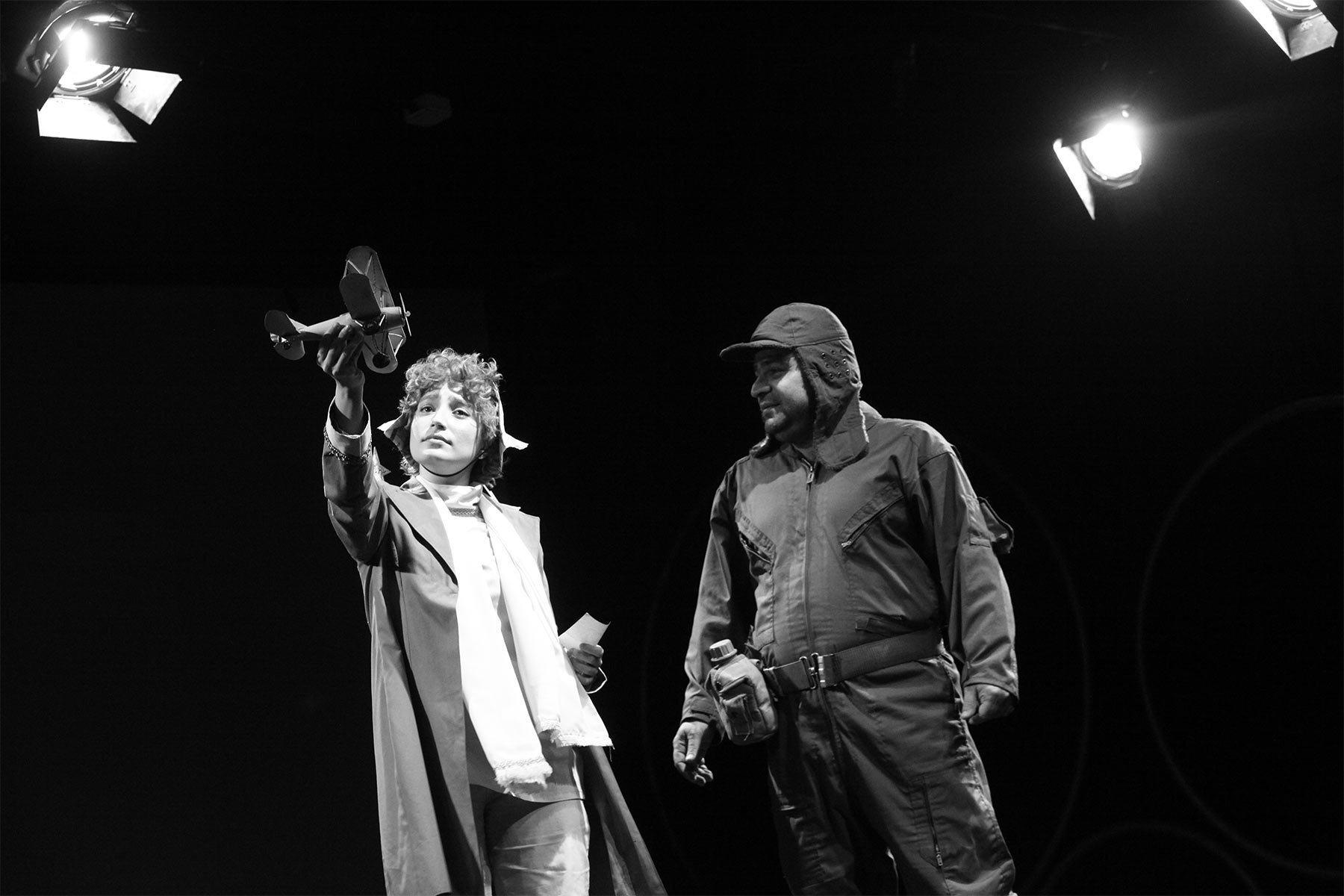
In 1966, the sociopolitical play Shahr-e Ghesseh (“The City of Tales”) was performed in Tehran. Most characters appeared as animals, with actors wearing masks. Directed by Bijan Mofid, it only ran for nine months but remains an iconic work of Iranian theatre that has reverberated across generations. In 2012, a group of political prisoners in Iran decided to restage Shahr-e Ghesseh. The “Donkey” role was first assigned to an inmate who, after several rehearsals, was freed. The role passed to another prisoner, also released soon after. This cycle repeated several more times, and with each reassignment, a mix of expectation and real life emerged on stage. Roles circulated, bodies left, but the theatre practice did not stop. What unfolded was not a narrative of prison, but a collection of moments with theatre arising from the separation of role and body.
In 2026, following the radicalism of their previous work, Dashti and Ahmadpour return to the festival with a breathtaking performance that presents theatre as an act of resistance. Noli Me Tangere (“Touch Me Not”) considers the role as something independent from the body. Here, theatre seeks to fulfil a suspended dream: the return of an imprisoned actor to the stage, while an important question is still alive. When the body is trapped, can the role become a space to rehearse emancipation?
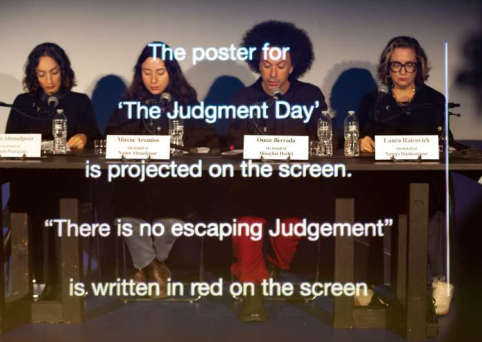
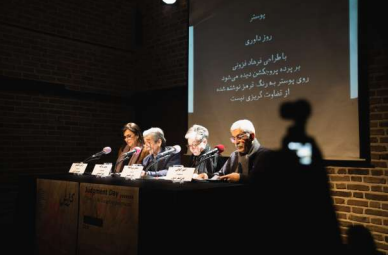
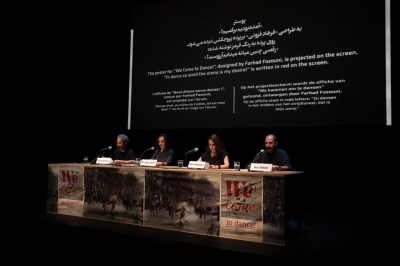
“Tables” project is a performing project, which itself includes four performances. We name each performance “A table”. We Prefer to define this set of performances as socio- performative action. In terms of subject and theme, each performance focuses on a documentary event from contemporary theater history in Iran. Each of these performances follows the same form and is repeated exactly every time. Each show’s structure contains four parts and is the same in all four performances. The scene description is the same in all four performances and is a recurring motif in them all. In all four performances, four performers sit behind a long table on the stage. Four performers read the text in all four performances. Reading the text is also a common performative contract in all these performances. The director of the first table is Nasim Ahmadpour. In the other three tables, the title of director will be awarded to three other performers on behalf of Nasim Ahmadpour, one by another. In all these performances, the scene is the same and only the words are different. Consider the uniform form of this set of performances as the performance contract.
The Tables Project and the Manifest Theater The “Tables” Project defines itself in the Manifest Theater as an effort to produce and sustain a socio-performative action. Each manifesto, like the manifestos of the various Tables Project versions, needs signatures. In a manifesto, everyone signs the same text. In the Tables Project, all directors declare their support and adherence to the manifesto and the anti-mainstream theater form by repeating a specific form in their performances and strictly adhering to the same rules as the first project (in this case, “Judgment Day” written and directed by Nasim Ahmadpour). In this project, the second, third, and fourth directors accept Nasim Ahmadpour’s directorship and become directors on her behalf. Then they propose their subjects to her. To preserve the manifesto and the first person’s form, they avoid creativity that disrupts it. Choosing the same mezzanine and trustworthiness is the act of directing for them. In this way, their choice itself is considered a form of creativity in alignment with the project and the intended manifesto.
Table (1): The Report on The
Judgment Day
Directed and written by Nasim Ahmadpour
Table (2): We Came To Dance
Written by Nasim ahmadpour Representative director: Aliasghar Dashti (on behalf of Nasim Ahmadpour)
Table (3): Don’t let the wind blow through your tresses!
Written by Nasim Ahmadpour (The writing is in progress)- Representative
Don Quixote Theatre Group aimes to explore new ways of communication with audience by attempting to eliminate some of their prior knowledge while producing a theatre liberated from literature…